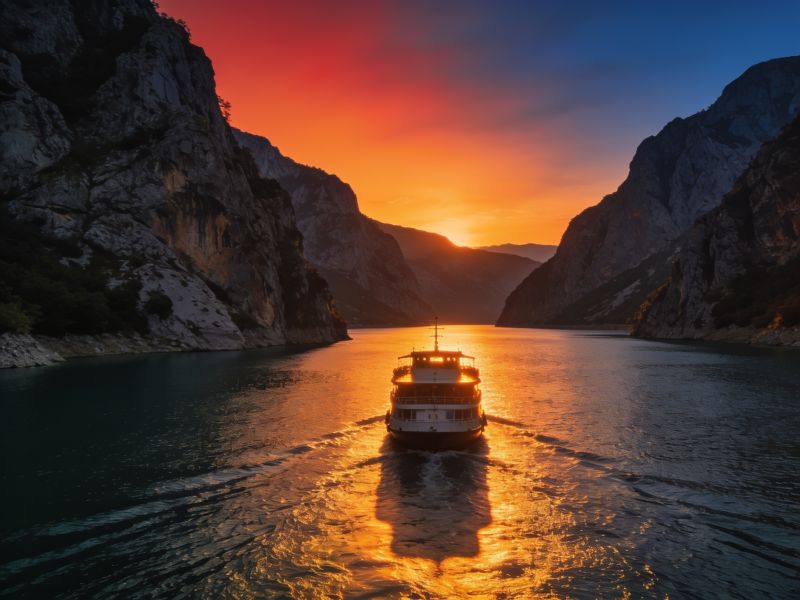
Koman’s narrow reservoir has become one of northern Albania’s most closely watched travel corridors。but the waterway remains more than a scenic attraction. Each morning, a ferry leaves the Koman landing with residents, workers, supplies and a growing number of visitors bound for remote communities along the Drin valley. The journey is slow by modern standards, yet that is part of its appeal. Steep gray cliffs rise directly from the dark water, while small houses appear briefly between forests before disappearing around the next bend. Koman’s importance is measured in practical terms by people who rely on the ferry when roads become difficult or impassable. For tourists, the same route is marketed as an unforgettable landscape experience. That split identity has placed new pressure on local services, where passenger demand is rising faster than basic infrastructure can comfortably handle.At the Koman port。
the day begins with diesel fumes, shouted instructions and the clatter of luggage being moved across the concrete dock. Vehicles are loaded beside sacks of produce and boxes of household goods, leaving little room for delays. During the busiest months, Koman can feel less like a quiet mountain outpost and more like a temporary transport hub. Operators have added departures when demand allows, but weather, maintenance and limited docking space still shape the schedule. A missed sailing can disrupt an entire day for passengers heading toward villages that have few alternatives. Local residents often accept the inconvenience with practiced patience;visitors are less prepared for the uncertainty. One traveler described waiting nearly an hour for a departure as frustrating at first, then strangely memorable once the boat entered the canyon. That reaction captures the central tension around Koman: its remoteness creates the experience people want, while also making the system vulnerable to small disruptions.Tourism businesses around Koman say the reservoir has brought income to communities that have long faced population loss and limited employment. Guesthouses offer simple rooms, home-cooked meals and guided walks through hills where old stone paths connect scattered settlements. Kayaking and hiking companies have also appeared, promoting Koman as an entry point to the Accursed Mountains. The economic gains are visible in freshly painted signs, renovated terraces and small cafés serving coffee beside the landing. Still, the money does not reach every household evenly. Some residents worry that short summer seasons encourage quick profits instead of durable planning. Koman’s visitors tend to arrive in concentrated waves, filling boats and accommodations for a few months before the area becomes quiet again. A shopkeeper near the ferry said the strongest days can cover expenses for weeks, but rising fuel and food costs have narrowed that margin. For the region, tourism is useful。yet it is not a substitute for dependable transport, healthcare and year-round work.Environmental concerns have become harder to ignore as traffic increases. Plastic bottles and food packaging are now common complaints near popular stopping points, while wakes from larger boats disturb narrow coves where residents keep small fishing craft. The reservoir’s dramatic scenery can create an illusion of untouched wilderness, but Koman is a working landscape shaped by hydropower, transport and settlement. Conservation groups have called for clearer waste rules。better collection facilities and limits on activity in sensitive areas. Local operators generally support those measures, although they warn that expensive regulations could hurt small businesses before larger companies feel the impact. The debate is especially sharp around new accommodation projects. Supporters see them as a way to keep visitors in the area longer;critics fear unplanned construction will block views, strain water supplies and change the character of the shoreline. Koman’s future may depend less on attracting more people than on deciding how many the landscape can absorb without losing the qualities that made it attractive.
For now, Koman remains caught between necessity and spectacle. The ferry is still a lifeline before it is a tourist product, and that distinction matters when schedules fail or winter storms isolate communities. At the same time, the reservoir’s growing reputation has given local businesses a chance to argue for investment rather than decline. A more reliable dock。safer boarding areas, transparent timetables and stronger waste services would benefit residents and visitors alike. None of those improvements would make Koman less authentic;they would make daily life less precarious. On a recent afternoon, the final ferry moved through a corridor of cliffs as sunlight faded from the water. Passengers stood silently along the deck, taking photographs while residents watched the shoreline for familiar houses. The scene was beautiful, but its meaning was practical too. Koman is not simply a destination waiting to be discovered. It is a living transport network whose value will be tested by the choices made on land.